
Choose hotel bedside wall sconces when a fixed position and a clear bedside surface suit the room; choose table lamps when furniture placement and a movable decorative element suit the brief. For either option, review switch access, visible glare, cleaning and maintenance in a room mock-up. A decorative lamp is not automatically a reading light.
Bedside lighting is part of the guest’s everyday use of a room. The right selection needs to work with the mattress height, headboard, bedside table and control layout. For hotel buyers, those relationships are easier to approve in one coordinated room-type schedule than in separate lighting and furniture lists.
Wall sconces vs table lamps at the bedside
| Buyer question | Wall sconce | Table lamp |
|---|---|---|
| Where does it sit? | A fixed position coordinated with the wall or headboard and bedside furniture. | A position on the bedside surface, with space reserved for the base and shade. |
| How is it controlled? | Confirm the switch location and whether room controls operate the selected version. | Confirm the lamp switch, outlet or power arrangement and cable route. |
| What needs checking? | Projection, mounting access and the visible light source from the bed. | Stability, usable table space, cable management and visible light source. |
| How is it maintained? | Review access to the lamp, driver and mounting components. | Review shade cleaning, component access and how the lamp is moved for cleaning. |
Decide whether the light is decorative, for reading, or both
A softly lit shade can add atmosphere while still leaving a book poorly illuminated. Conversely, a light aimed at a reading area may not provide the room’s desired decorative effect. Write down the intended task before shortlisting shapes, and ask for available photometric information or a working sample where that task matters.
In the mock-up, check the lamp from the doorway, from a seated position and from a reclined position. Ask the reviewer to reach the switch naturally and look towards the opposite side of a double or twin bed. Record observations about glare and spill light rather than approving appearance from one photograph.
Two collection examples with different construction
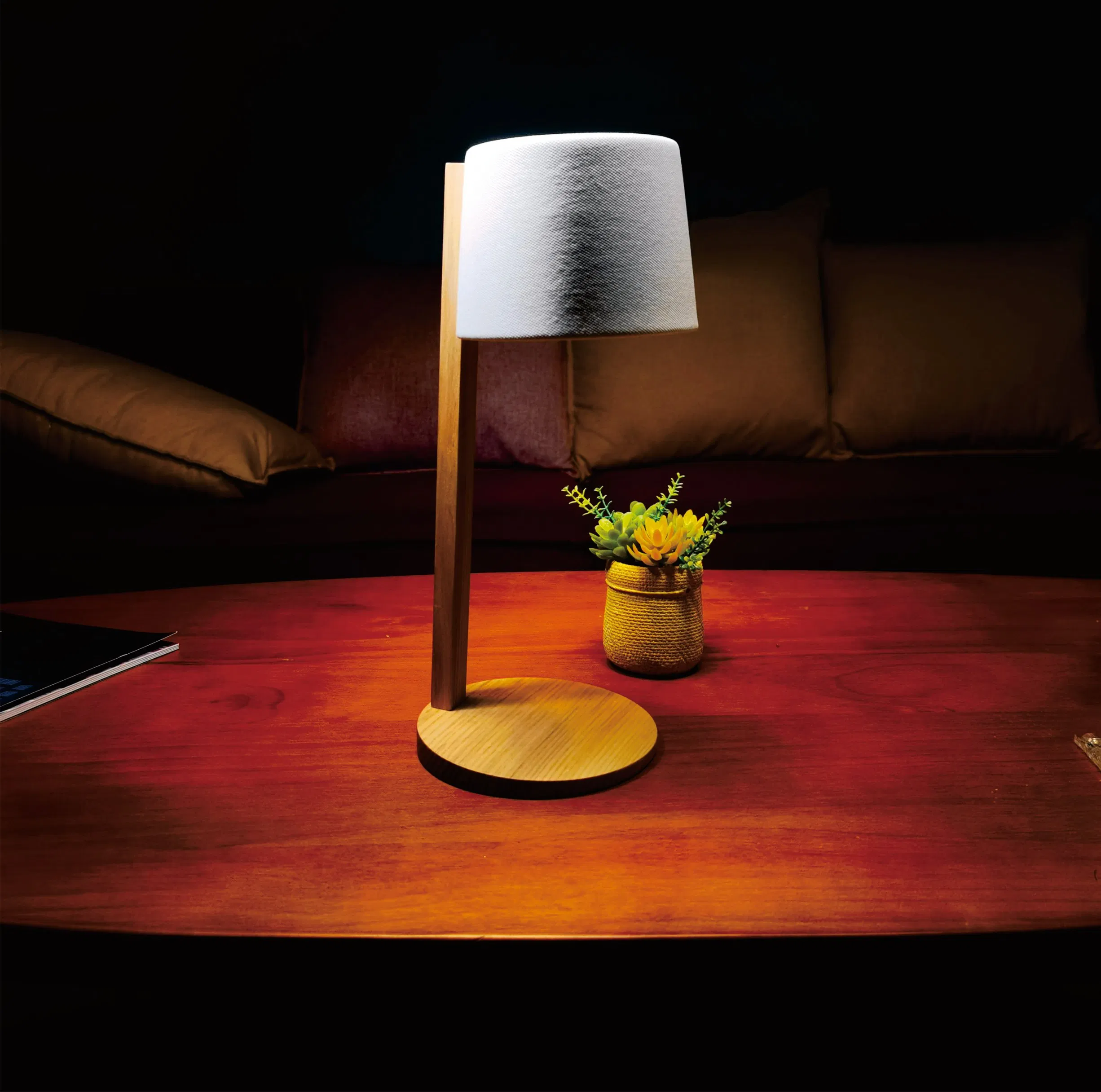
HPL-001073 is a wood and fabric-covered table lamp. Its record lists a 140 × 130 × 310mm body, LED light source, 2W power and 5V 2A input. The input is a detail to resolve with the supplied power arrangement; it should not be interpreted as a direct mains connection. Confirm the adapter, cable, switch and any charging requirements for the selected order.
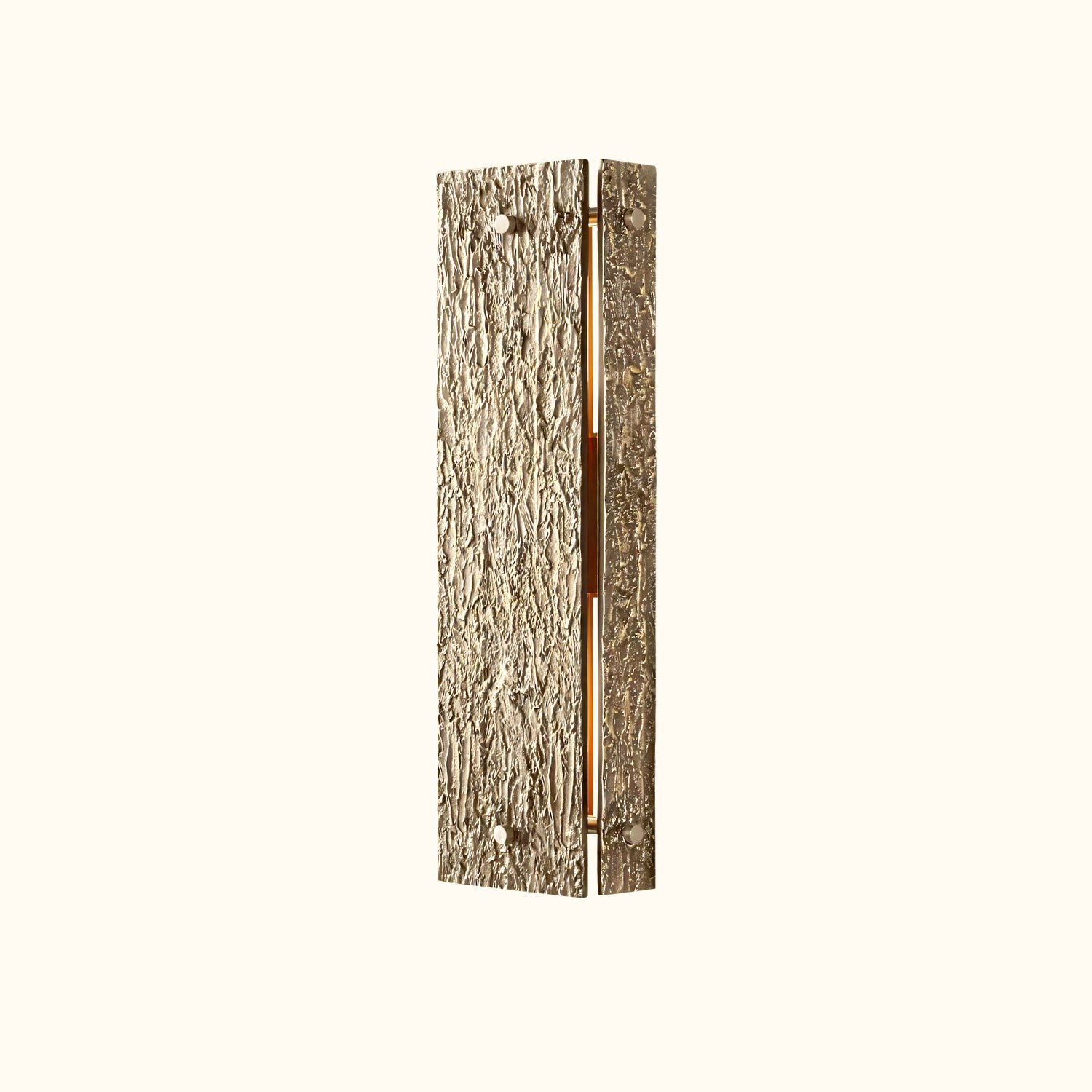
HPL-001449 offers a wall-mounted decorative reference. It lists brass and glass, an E26 light-source field and two body heights: 18.9 and 31.9 inches. Compare the selected size against a headboard elevation. The catalogue information does not establish a reading beam, room-control compatibility or suitability for a particular hotel specification.
These models illustrate different construction choices. They are not evidence of a completed hotel installation. Browse the wall sconce collection and table lamp collection to assemble a shortlist for your own room layout.
Specify colour and controls as separate requirements
Colour temperature describes the appearance of the light; colour rendering describes how objects appear under it. These are separate selection criteria, as explained in the U.S. Department of Energy’s LED Basics guidance. Ask for the available specifications and review the selected light with the actual headboard, wall finish and fabrics.
For dimming, identify the lamp or driver and the exact proposed control. The Department of Energy’s light-bulb purchasing guidance advises checking both dimming capability and compatibility with the dimming system. Test the proposed combination in the mock-up, including low-level operation and switching.
What belongs in a bedside lighting room schedule?
- Room-type code, bed arrangement and a marked headboard elevation.
- HPL model, selected size, material, finish and quantity per room.
- Fixed mounting position or reserved table footprint, with switch and power locations.
- Selected light source, colour requirements and intended control system.
- Sample approval reference, maintenance requirements and separately listed spares.
- Destination market, delivery phases and required product documentation.
Keep a separate line for each approved configuration. If the room type changes, revise the lighting and furniture references together. Our hotel and hospitality lighting page provides a route for discussing a coordinated project enquiry.
Buyer questions
Are wall sconces always better for small hotel rooms?
They can free bedside surface space, but projection, mounting access and the headboard layout still need review. Compare the complete room arrangement before choosing.
Can any decorative bedside light be used for reading?
No. Check light distribution and guest use in a working mock-up. A decorative photograph and a wattage label do not establish reading performance.
Should every room use the same bedside model?
A shared model can help create a consistent range, but the selected size, controls and mounting must suit each room type. List any different configurations explicitly.
Prepare a bedside lighting brief
Send your room-type schedule, headboard drawing, model shortlist, quantities and destination market to HuPoLux Lighting. Include the decisions that still need a sample or technical review.