
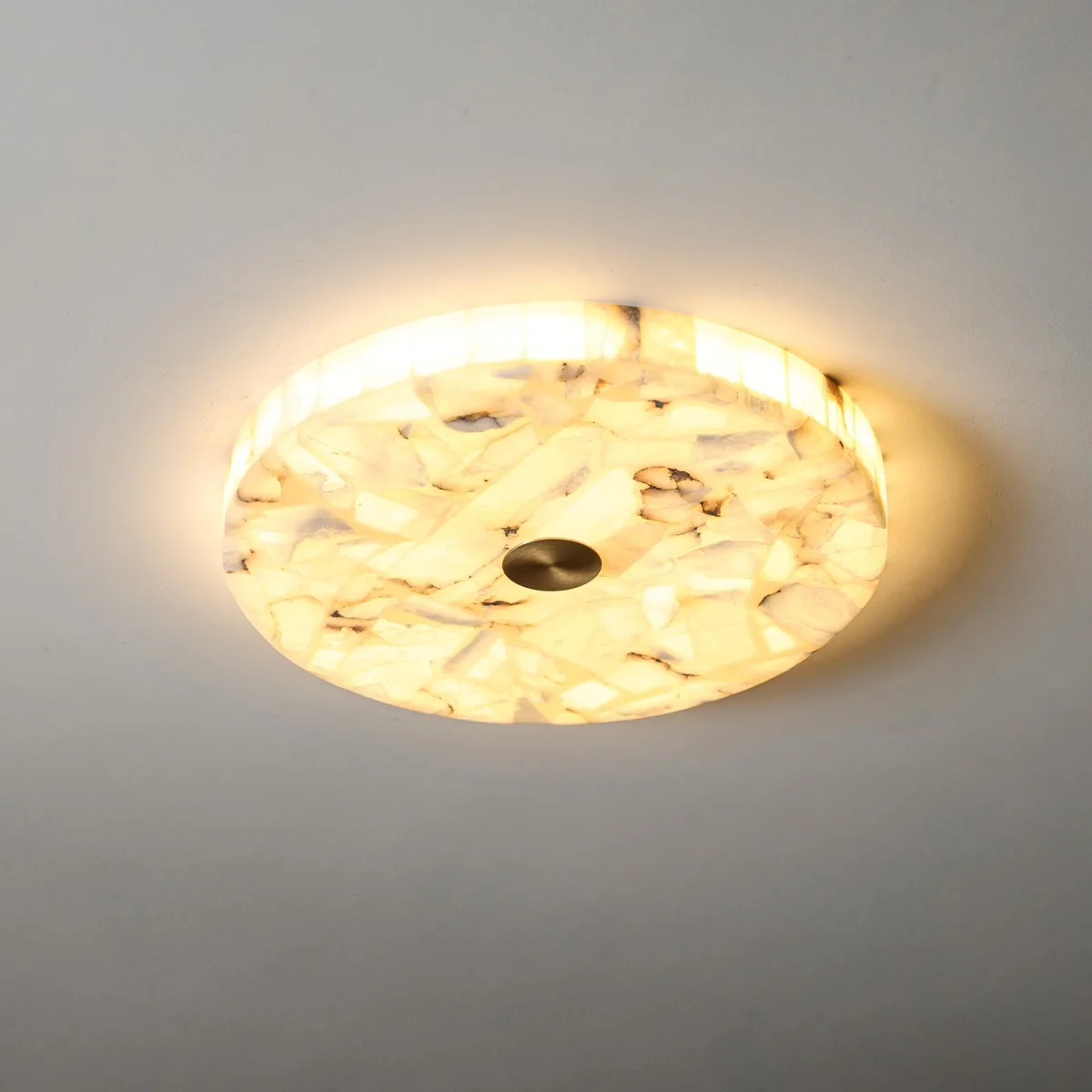
Choose alabaster lighting when the design depends on light passing through stone; consider travertine lighting when surface texture and a solid stone form matter more. The finished effect also depends on stone thickness, finish and the position of the light source. Compare an illuminated sample of the actual fixture before approving a collection or project order.
For interior designers and wholesale buyers, “natural stone lighting” is a starting point. An alabaster ceiling light and a travertine wall sconce can create very different effects, even when both fit a warm, neutral interior. Here is how to turn the material choice into a usable buying brief.
What is the difference between alabaster and travertine lighting?
Alabaster is associated with pale, translucent stone surfaces. The illuminated photograph of HPL-000870, an alabaster and brass ceiling light, shows light passing through its patterned stone face. This is a useful reference for the effect, rather than a promise that every stone piece will have the same veining or brightness.
Travertine is a type of limestone. The Natural Stone Institute describes its earth tones and identifies it as terrestrial limestone. For a lighting brief, specify the visible texture, colour and surface finish separately. A painted finish may change the appearance substantially, so a material name alone will not describe the finished product.
| Decision | Alabaster lighting | Travertine lighting |
|---|---|---|
| Visual priority | Review the stone illuminated and unlit, especially veining and light transmission. | Review the surface texture, colour, filled areas and any coating. |
| Construction | Confirm which stone parts transmit light and where the LED or lamp sits. | Confirm the light opening and how it directs light around the stone body. |
| Consistency | Agree an acceptable range of veining and colour using physical references. | Agree acceptable texture and finish variation using physical references. |
| Order approval | Identify the selected size, electrical version and approved stone sample. | Identify the selected size, surface treatment and approved finish sample. |
Compare the material and the construction together
HPL-000870 lists brass and alabaster, integrated LED, 3000K and a 110–120V input. Those details describe that model; they do not establish the specification of every product in the alabaster lighting collection. Confirm the final dimensions and electrical specification for the size you select.
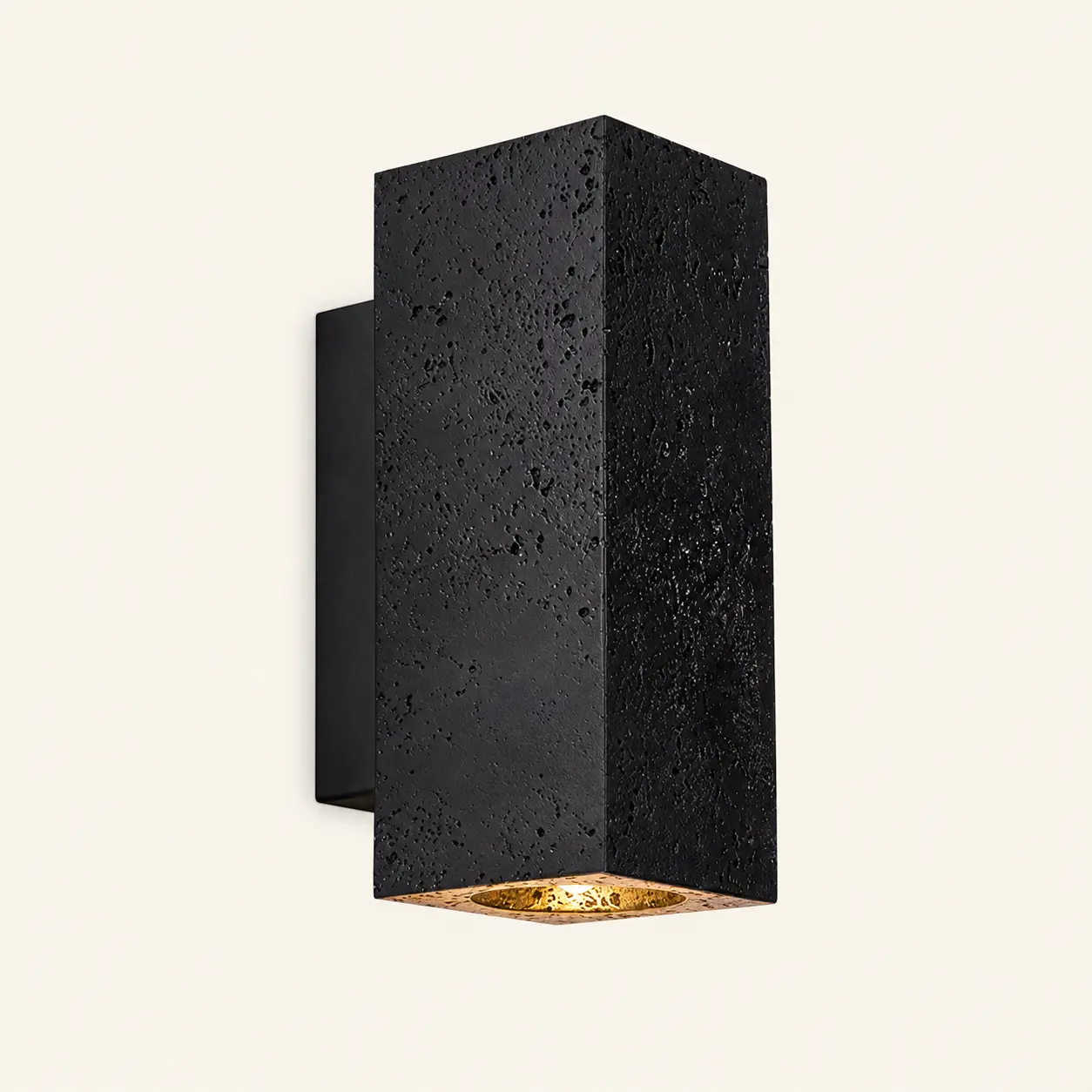
HPL-001017 provides a different reference within the travertine lighting collection: its material field is “Travertine + Metal,” its finish is black and its light-source field is E27. Use that combination to discuss the desired effect. The dark surface in the photograph should not be treated as the uncoated colour of all travertine.
How should buyers approve natural stone variation?
- Review the complete sample. Look at the stone with the fixture switched off and on, using the proposed light source.
- Record the reference. Keep dated sample photographs and identify the finish or sample code on the order.
- Define the acceptable range. Describe which variations are welcome and which would change the design. “Exactly like the website photo” leaves too much open.
- Separate appearance from performance. Ask for weight, mounting information, light output and control compatibility for the selected fixture.
The Smithsonian American Art Museum explains how mineral impurities create coloured flecks and veins in an alabaster object. That supports allowing for natural variation; it does not determine the mineral composition or origin of a particular lamp. Confirm the actual stone description with the supplier.
Include care and packing in the material decision
Ask for a care sheet that covers the assembled light, including stone, metal finish and electrical parts. The Natural Stone Institute notes that travertine is sensitive to mild acids and that absorption varies between stones. Do not select a household cleaner from colour or appearance alone.
For shipping, request a packing proposal showing how the stone is supported and separated from other components. Record the selected model and configuration on the carton list. Our quality and packaging page outlines the questions to raise when defining an order.
Buyer questions
Does every alabaster lamp produce the same glow?
No. The visible effect depends on the stone, thickness, construction and light source. Compare a lit sample of the selected fixture and agree acceptable appearance variation.
Does travertine lighting always have a beige finish?
No. The material and surface finish are separate specifications. HPL-001017, for example, is listed as travertine and metal with a black finish.
Can a stone fixture be specified for a bathroom from its material alone?
No. Confirm the complete fixture’s environmental suitability, electrical version and relevant documentation for the intended location. A stone material name does not establish an IP rating.
Build your stone lighting shortlist
HuPoLux manufactures decorative lighting for wholesale orders and custom interior projects. Send the HPL models, quantities, destination market and sample requirements so the production configuration and selected specifications can be reviewed.
Travertine product examples
Compare the textured stone and opal glass of the Travertine Ribbed Column Wall Sconce (HPL-000411) with the stone column and metal dome of the Travertine Dome Table Lamp (HPL-001665). Check each model’s listed dimensions and light source when choosing between fixture types.